

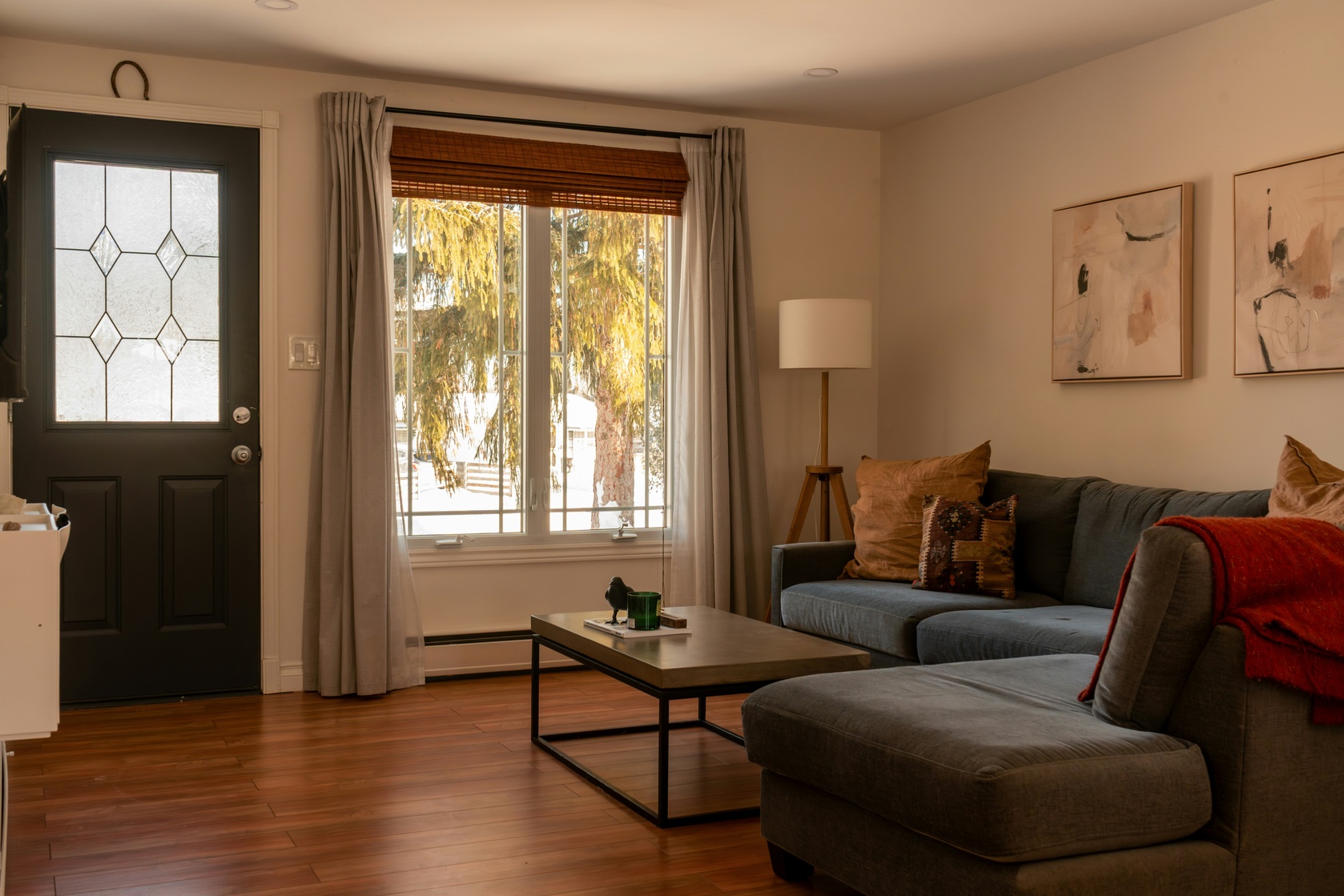
You walk into a room and immediately feel something. Maybe it's warmth. Maybe it's calm. Maybe it's an inexplicable sense of energy or creativity. You might attribute that feeling to the paint color on the walls, the furniture arrangement, or the lighting streaming through the windows. But there's a silent influencer beneath your feet that's shaping your emotional experience far more than you realize — your flooring.
At Lavy's Flooring in Zanesville, OH, we've spent years helping homeowners and business owners select the perfect floors for their spaces. And while we talk a lot about durability, style, and maintenance, we think it's time to have a deeper conversation about something most people overlook: the profound psychological impact that flooring choices have on the people who live and work above them.
This isn't just feel-good speculation. Interior designers, environmental psychologists, and workplace researchers have long studied the relationship between our physical environments and our mental states. Flooring — the largest uninterrupted surface in any room — plays a starring role in that relationship. Let's explore how.
The Ground Beneath Us: Why Flooring Matters More Than You Think
Think about how much of your sensory experience is connected to the floor. You feel it beneath your feet every single step you take. You see it stretching across your entire field of vision when you look down or even straight ahead. You hear the sounds it produces — the soft hush of carpet, the crisp click of heels on hardwood, the subtle give of luxury vinyl. You might even smell it, especially when it's new.
Flooring engages nearly every sense simultaneously, which is precisely why it has such a powerful effect on our subconscious minds. Environmental psychologists refer to this as "ambient environment influence" — the way background elements in a space shape our behavior and emotions without us consciously registering their impact.
When you choose flooring for your home, you're not just picking a material. You're setting an emotional tone for every moment that will unfold in that space. That's a responsibility worth taking seriously.
Carpet and Comfort: The Emotional Warmth Factor
There's a reason carpet has remained one of the most beloved flooring choices for bedrooms, living rooms, and family spaces for generations. Carpet does something no other flooring material can do quite as effectively — it creates an immediate, visceral sense of warmth and comfort.
When your bare feet sink into plush carpet fibers first thing in the morning, your brain receives a tactile signal that says "safe, comfortable, home." This isn't trivial. Research in environmental psychology has shown that tactile comfort in our surroundings reduces cortisol levels, the hormone associated with stress. Soft surfaces literally help us relax.
Beyond the physical sensation, carpet also provides acoustic comfort. Hard surfaces reflect sound waves, creating echo and ambient noise that can subtly increase stress levels over time. Carpet absorbs sound, creating a quieter, more peaceful environment. For families with young children, for people who work from home, or for anyone who values tranquility, this sound-dampening quality is a genuine mental health benefit.
Color plays a role here too. A deep blue carpet can evoke feelings of serenity and trust. A warm beige or cream carpet creates a sense of openness and calm. Rich, dark carpet in a study or office can foster feelings of sophistication and focus. When you choose carpet at Lavy's Flooring, we help you think through not just the practical considerations but the emotional atmosphere you want to create.
Hard Floors and Mental Clarity
On the other end of the spectrum, hard flooring surfaces — hardwood, laminate, tile, luxury vinyl plank — offer their own unique psychological benefits. Where carpet whispers comfort, hard floors speak to clarity, cleanliness, and order.
There's a reason that minimalist designers and productivity experts often gravitate toward clean, hard flooring surfaces. Visual simplicity reduces cognitive load. When your brain doesn't have to process complex textures and patterns on the floor, it has more mental bandwidth available for thinking, creating, and problem-solving.
Hard floors also create a sense of spaciousness. Light-colored hardwood or luxury vinyl can make a small room feel significantly larger, which directly impacts how confined or free we feel in a space. For people prone to anxiety or claustrophobia, this spatial perception shift can be genuinely therapeutic.
In kitchens and bathrooms, hard flooring contributes to a sense of hygiene and cleanliness that puts the mind at ease. Knowing that your floors are easy to clean and resistant to moisture and bacteria provides a subtle but real form of psychological comfort. You're not worrying about hidden allergens or difficult-to-clean spills — and that freedom from worry is itself a form of well-being.
Color Psychology and Your Floors
Interior designers have long understood that color influences mood, but most homeowners apply this knowledge only to their walls. Your floor, however, occupies a much larger percentage of your visual field than any single wall, making its color arguably more impactful.
Warm tones — honey oak, amber, terracotta, warm gray — create feelings of coziness, welcome, and intimacy. These are excellent choices for living rooms, dining rooms, and bedrooms where you want people to feel comfortable and connected.
Cool tones — ash gray, slate blue, cool white, pale birch — evoke feelings of calm, professionalism, and modern sophistication. These work beautifully in home offices, bathrooms, and contemporary living spaces where you want a sense of order and tranquility.
Dark tones — espresso, walnut, charcoal, deep mahogany — create drama, elegance, and a sense of grounding. They work wonderfully in formal dining rooms, studies, and master bedrooms where you want to feel anchored and important.
Light tones — natural maple, whitewashed oak, pale bamboo — maximize the feeling of space, freshness, and optimism. They're ideal for smaller rooms, entryways, and any space where you want to create an uplifting, airy atmosphere.
When you visit our showroom at Lavy's Flooring, we encourage you to think about these emotional associations as you browse samples. Hold them up. Imagine them stretching across your room. Ask yourself: how does this color make me feel?
Texture, Pattern, and Subconscious Messaging
Beyond color, the texture and pattern of your flooring communicate subtle messages to your brain. A smooth, glossy floor suggests modernity, sophistication, and formality. A hand-scraped or distressed hardwood suggests history, authenticity, and warmth. A looped Berber carpet suggests casual comfort, while a dense, cut-pile velvet carpet suggests luxury and indulgence.
Patterns matter too. Geometric tile patterns can energize a space and stimulate creative thinking. Simple, uniform plank patterns create a sense of order and predictability that calms the mind. Herringbone or chevron patterns add visual interest without chaos, striking a balance between stimulation and harmony.
These aren't arbitrary design preferences. They're deeply rooted in how our brains process visual information. Our ancestors survived by reading environmental cues — smooth surfaces meant safety, rough surfaces meant caution, patterns meant intention and human presence. These instincts haven't disappeared. They've simply migrated into our interior design preferences.
Flooring and Productivity: What the Workplace Research Tells Us
If you work from home — and millions more Americans do now than ever before — your flooring choice in your home office could be directly affecting your productivity. Workplace environment studies have consistently shown that employees perform better in spaces that balance comfort with visual clarity.
Too much softness and warmth, and the brain shifts into relaxation mode, making it harder to focus on demanding tasks. Too much hardness and sterility, and stress levels creep up, leading to fatigue and reduced creativity. The sweet spot is a space that feels clean and organized (favoring hard flooring) with strategic touches of warmth (an area rug, for instance, or luxury vinyl with a warm wood tone).
At Lavy's Flooring, we've helped numerous Zanesville homeowners design home offices that strike this exact balance. Sometimes it's a beautiful luxury vinyl plank in a clean oak tone with a plush area rug under the desk. Sometimes it's low-pile carpet in a sophisticated neutral that provides comfort without inducing drowsiness. The right combination depends on your work style, your aesthetic preferences, and the kind of energy you need during your workday.
Making Intentional Flooring Choices
The most important takeaway from all of this research and observation is simple: your flooring choices should be intentional. Don't just pick what's on sale or what your neighbor has. Think about the life that will happen on top of those floors. Think about the feelings you want to cultivate. Think about the people who will walk, play, work, and rest on those surfaces every single day.
Flooring is one of the most significant investments you'll make in your home, not just financially but emotionally. The right floor can make your home feel like a sanctuary. The wrong floor can create a subtle, persistent sense of unease that you might never consciously identify but will always feel.
At Lavy's Flooring, we believe that helping our customers in Zanesville, OH, choose the right carpet or floor goes far beyond showing samples and quoting prices. We take the time to understand your lifestyle, your aesthetic vision, and yes, even your emotional goals for your space. Whether you're drawn to the enveloping comfort of plush carpet or the clean sophistication of modern hard flooring, our team is here to guide you toward a choice that will make your home feel exactly the way it should — like the best version of itself. Stop by our Zanesville showroom and let's start a conversation about the floor that's perfect for you, in every sense of the word.


