

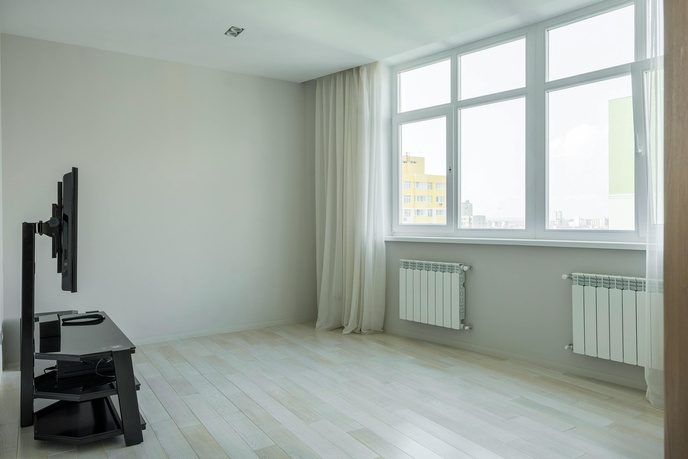
Nobody plans a flooring disaster. Nobody walks into a store thinking, "I'd love to spend thousands of dollars on a floor that buckles within six months." Nobody hires an installer hoping the seams will separate before the first anniversary. And yet, flooring disasters happen with alarming regularity — not because the products are inherently flawed or the homeowners are careless, but because small, preventable mistakes snowball into expensive, heartbreaking problems.
At Lavy's Flooring in Zanesville, OH, we've seen the aftermath of just about every flooring catastrophe imaginable. We've been called in to assess warped hardwood, rippling carpet, cracking tile, and peeling vinyl that was installed just months earlier. In almost every case, the root cause traces back to a handful of common errors that could have been avoided with better information and guidance. This article is our attempt to share those lessons so that your flooring investment delivers the beauty, durability, and satisfaction you deserve.
The Moisture Monster: Enemy Number One
If flooring disasters had a most wanted list, moisture would occupy the top spot with a permanent booking. More floors are ruined by moisture-related issues than any other single cause, and the tragedy is that most moisture problems are entirely preventable with proper testing and preparation.
Here in Zanesville, OH, we deal with a climate that includes humid summers, wet springs, and the occasional flooding concern that comes with Ohio's river-valley geography. Concrete subfloors in basements and slab-on-grade construction are particularly susceptible to moisture vapor transmission — a process where water vapor migrates upward through concrete and attacks flooring materials from below.
The disaster scenario plays out like this: A homeowner falls in love with a gorgeous laminate or hardwood floor, purchases it, and has it installed directly on a concrete subfloor without conducting a moisture test. For the first few weeks, everything looks magnificent. Then, slowly, boards begin to cup or crown. Edges start lifting. A musty smell develops. Within months, the entire floor is compromised, and the homeowner faces a complete tear-out and replacement.
The prevention is straightforward but absolutely non-negotiable: test your subfloor for moisture before any flooring installation. Professional-grade calcium chloride tests or relative humidity probe tests provide accurate readings that determine whether your subfloor is ready for installation. If moisture levels are too high, mitigation strategies like moisture barriers, vapor retarders, or specialized primers can resolve the issue before a single plank or tile goes down.
This is one area where the expertise available at a dedicated flooring store like Lavy's Flooring makes an enormous difference. We don't just sell you a floor and wish you luck — we help you understand the conditions that floor needs to succeed and ensure those conditions exist before installation begins.
The Acclimation Mistake That Ruins Beautiful Floors
Here's a scenario we encounter with depressing frequency: A homeowner orders hardwood or laminate flooring and, excited to see their new floor, schedules installation for the day after delivery. The boxes are brought in, opened, and the planks are installed within hours of arriving at the home. Everything looks perfect at first. Then, over the following weeks, gaps appear between boards. Or the opposite happens — boards expand and push against each other, creating buckling and pressure ridges.
The culprit? Failure to acclimate the flooring material to the home's environment.
Wood and wood-based products are hygroscopic, meaning they absorb and release moisture in response to their surrounding environment. When flooring materials are manufactured and stored in a warehouse, they equilibrate to that environment's temperature and humidity. Your home has a different temperature and humidity profile. When flooring is installed before it has had time to adjust to your home's conditions, it will expand or contract after installation, causing visible and often irreversible damage.
Proper acclimation means bringing your flooring materials into the room where they'll be installed and allowing them to sit — typically for a minimum of 48 to 72 hours, though some products and conditions require longer — while your HVAC system runs at normal operating conditions. This allows the materials to reach equilibrium with your home's environment so that any dimensional changes happen before the floor is locked into place.
It seems like such a simple step, and it is. But skipping it is one of the most common causes of flooring failure, and it's one that no amount of warranty coverage will fix because failure to acclimate is explicitly excluded from virtually every manufacturer's warranty.
Subfloor Sins: The Hidden Foundation of Failure
Your finished floor is only as good as the subfloor beneath it. This truth is so fundamental that experienced flooring professionals consider subfloor preparation the single most important phase of any installation project, yet it's the phase most frequently rushed, shortcut, or ignored entirely.
A subfloor needs to be clean, dry, flat, and structurally sound. Each of these requirements matters, and cutting corners on any of them invites disaster.
Flatness is perhaps the most commonly overlooked requirement. Industry standards typically call for subfloors to be flat within 3/16 of an inch over a 10-foot span. That sounds like an incredibly tight tolerance, and it is, but it exists for critical reasons. Flooring materials installed over uneven subfloors will telegraph those imperfections, creating visible bumps, dips, and ridges in the finished surface. Worse, high spots create pressure points that accelerate wear in carpet and cause cracking in rigid flooring materials, while low spots create voids where flooring can flex and eventually break.
Addressing subfloor flatness often requires the application of self-leveling compounds, grinding down high spots, or replacing damaged subfloor sections. These steps add time and cost to a project, which is why they're so frequently minimized by installers who are cutting corners to offer lower prices. But every dollar spent on proper subfloor preparation pays for itself many times over in the longevity and performance of your finished floor.
At Lavy's Flooring, we've made subfloor assessment a core part of our process because we've seen too many beautiful floors fail due to what was lurking underneath them.
The Cheap Installation Trap
In the age of online shopping and gig-economy labor, it's tempting to purchase flooring from the cheapest source and hire the cheapest installer you can find. On paper, the savings can look substantial. In practice, this approach is one of the most reliable paths to flooring disaster.
Professional flooring installation is a skilled trade that requires training, experience, and an understanding of how different materials behave in different conditions. A skilled carpet installer knows how to properly stretch carpet to prevent ripples and wrinkles, how to seam pieces invisibly, and how to handle transitions between rooms and flooring types. A skilled hard-surface installer understands expansion gaps, stagger patterns, underlayment requirements, and the specific installation methods recommended by each manufacturer.
When installation is performed by someone without this expertise, the results can range from merely disappointing to catastrophically expensive. We've seen carpet installations where seams were placed in high-traffic areas and began unraveling within weeks. We've seen laminate installations where no expansion gap was left around the perimeter, causing the entire floor to buckle when seasonal humidity increased. We've seen tile installations where improper thinset application created hollow spots that cracked under normal foot traffic.
The cost of correcting a bad installation almost always exceeds the savings that motivated the shortcut in the first place. Tear-out labor, disposal costs, replacement materials, and reinstallation add up quickly, and the emotional toll of watching your dream floor get ripped out is something no one should have to experience.
Choosing the Wrong Flooring for Your Lifestyle
Not every flooring disaster involves installation errors or moisture problems. Sometimes the disaster is simply a mismatch between the flooring material and the household that's living on it.
A pristine white carpet in a home with three dogs and two toddlers is not a design choice — it's a countdown to heartbreak. A delicate, hand-scraped hardwood in a household that hosts weekly gatherings with dozens of guests is going to show damage that goes beyond charming character. A high-gloss floor in a home where the owners prefer low-maintenance living will become a source of constant frustration as every footprint, dust particle, and minor scratch becomes glaringly visible.
Honest self-assessment about your household's lifestyle is crucial when selecting flooring. This means acknowledging how many pets you have, how active your children are, how much traffic your rooms receive, how much time and effort you're willing to dedicate to maintenance, and what your tolerance is for visible wear. A flooring material that matches your actual lifestyle will continue looking good and performing well for years. A flooring material chosen based on an idealized version of your lifestyle will disappoint you from the start.
The team at Lavy's Flooring excels at having these honest conversations. We'd rather guide you toward a durable, realistic choice that makes you happy for fifteen years than sell you a premium product that makes you miserable within fifteen months.
The DIY Dilemma
The explosion of home improvement content on social media has convinced many homeowners that flooring installation is a straightforward weekend project. And for some products, in some situations, with some skill levels, that can be true. Click-lock luxury vinyl plank in a small, square room with a perfectly flat subfloor is genuinely within reach for a capable DIY enthusiast.
But the gap between what looks easy in a carefully edited video and what actually happens in a real home with real imperfections is vast. Videos rarely show the installer dealing with out-of-square walls, uneven subfloors, complex room geometries, or the dozen small decisions that experienced professionals make instinctively but that trip up newcomers. A single miscalculation in the first row of a floating floor installation, for example, compounds across the entire room and can result in a floor that looks visibly wrong when it reaches the opposite wall.
If you're considering a DIY installation, be honest about your skills, invest in proper tools, read the manufacturer's installation instructions completely before starting, and don't hesitate to call in professional help if the project exceeds your capabilities. There's no shame in recognizing when a job requires professional expertise — in fact, it's one of the smartest decisions a homeowner can make.
Prevention Is Always Cheaper Than Repair
Every flooring disaster we've described shares a common thread: they were preventable. Moisture testing, proper acclimation, subfloor preparation, professional installation, honest lifestyle assessment, and realistic DIY evaluation are all straightforward steps that dramatically reduce the risk of flooring failure.
At Lavy's Flooring in Zanesville, OH, prevention is built into everything we do. From the moment you walk into our showroom, our goal is to ensure that your flooring investment succeeds — not just on installation day but for years and decades to come. We provide expert guidance on product selection, thorough subfloor evaluation, professional installation services, and ongoing support that keeps your carpet and floors looking and performing their best. Your home deserves flooring done right, and we're here to make sure that's exactly what you get. Come visit us and let's build a flooring plan that avoids every pitfall and delivers every promise.


