

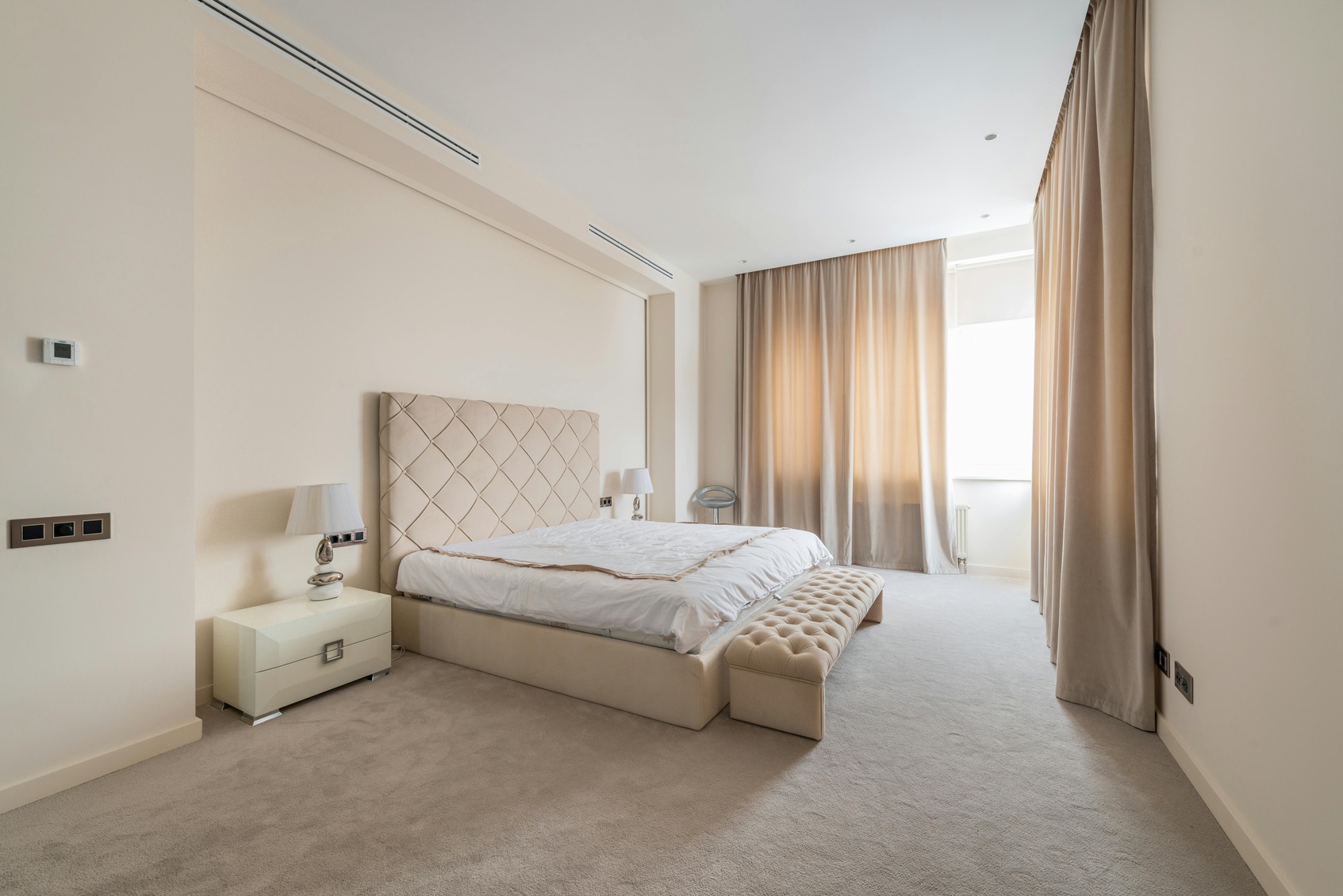
For a long time, carpet was associated with a particular image: neutral colours, wall-to-wall installation, and a practical role in making rooms comfortable. While that description may have once been familiar, it no longer captures what modern carpet can offer.
Today, carpet can be bold, understated, textured, patterned, warm, contemporary, traditional, or almost invisible within a room.
That evolution has changed the way homeowners can think about carpet.
Instead of treating it as a material that simply fills the floor, consider it part of the interior design.
Colour is the obvious starting point, but it is only one part of the equation.
A neutral carpet can act as a visual foundation. Rather than competing with the rest of the room, it creates a consistent surface beneath furniture and décor. This can be particularly useful when the room already contains strong architectural details, colourful artwork, patterned furniture, or distinctive lighting.
But neutral does not have to mean boring.
Subtle variation within the carpet can create depth. Different fibres or textures can catch light differently, adding visual interest without introducing a strong pattern.
For homeowners who want something more expressive, patterned carpet can create an entirely different effect.
A geometric design can give a room a contemporary personality. A softer organic pattern can introduce movement without feeling overly formal. Even a subtle pattern can change how a large floor area is perceived.
Texture is another design tool that is often overlooked.
Two carpets can have almost identical colours but create completely different impressions because of their texture. One may appear smooth and refined, while another feels more casual and layered.
That makes carpet particularly useful for creating different moods in different rooms.
A bedroom might benefit from a soft, quiet design. A family room could accommodate more texture. A home office might work well with something understated that supports concentration rather than competing for attention.
The floor can even influence how large or intimate a room feels.
Lighter colours can contribute to an open appearance, while deeper colours can create a sense of coziness. Stronger visual patterns can make a floor more noticeable, while subtle designs allow the eye to move toward furniture and architectural details.
Of course, design is only half of the decision.
Carpet should also be selected according to the demands of everyday life.
A household with children may experience more spills, movement, and activity than a quiet adult household. A home with pets may require different cleaning considerations. A busy family room may need flooring designed to handle regular traffic, while a formal guest room may experience far less use.
These practical considerations do not have to limit creativity. They simply help narrow the enormous range of choices into the options that make sense for the specific room.
Another consideration is how the carpet connects with the rest of the house.
A home does not necessarily need identical flooring in every room. In fact, using different flooring types strategically can help define the purpose of different spaces.
Carpet can create softness in bedrooms and family rooms, while another flooring material may be used in areas where a hard surface is more appropriate. The transition between rooms can become part of the home's overall design rather than something that needs to be hidden.
Even within a carpeted space, area rugs can introduce another layer of visual interest.
A rug can sit on top of carpet to define a seating area, introduce colour, or create a visual focal point. It can also be changed more easily than permanent flooring when the room's décor evolves.
This layered approach allows homeowners to experiment without redesigning the entire space.
The important thing is to avoid choosing flooring solely from a small sample.
Carpet can appear different when viewed across a large surface. Natural light, artificial lighting, wall colour, furniture, and room size can all influence the final appearance.
Whenever possible, imagine the carpet covering the entire room. Think about how the pattern will repeat. Consider whether the colour will feel too strong or too quiet once it surrounds the space.
This is particularly important with patterned carpet.
A pattern that looks subtle on a small sample may become much more prominent when repeated across a large floor. Conversely, a design that appears dramatic in isolation may become beautifully restrained when surrounded by furniture and other room elements.
The goal is balance.
A room does not need every element to make a statement. Sometimes the most sophisticated interiors combine a quiet floor with expressive furniture, or a distinctive carpet with simple walls and furnishings.
Flooring provides the foundation for everything else.
For homeowners in Zanesville, OH, Lavy's Flooring can help explore carpet options that fit both the visual direction and practical requirements of the home.
The next time you hear the word “carpet,” think beyond beige. Think texture. Think atmosphere. Think acoustics. Think comfort. Think colour. Think about how many different stories the floor can tell.
Modern carpet is not simply something beneath the room.
It can be part of what makes the room feel like home.


